

.png?x-oss-process=image/resize,h_100,m_lfit/format,webp)
.png?x-oss-process=image/resize,h_100,m_lfit/format,webp)
.png?x-oss-process=image/resize,h_100,m_lfit/format,webp)

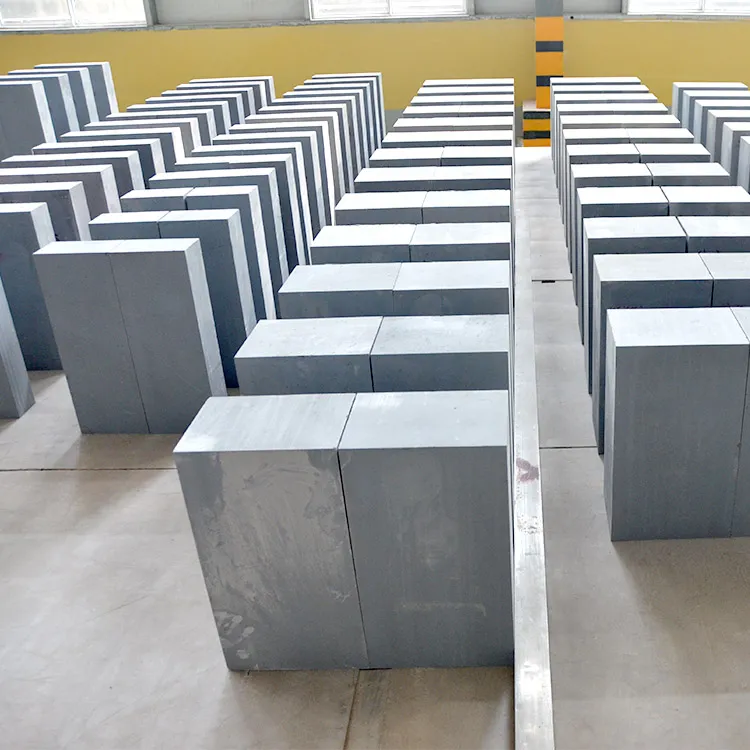
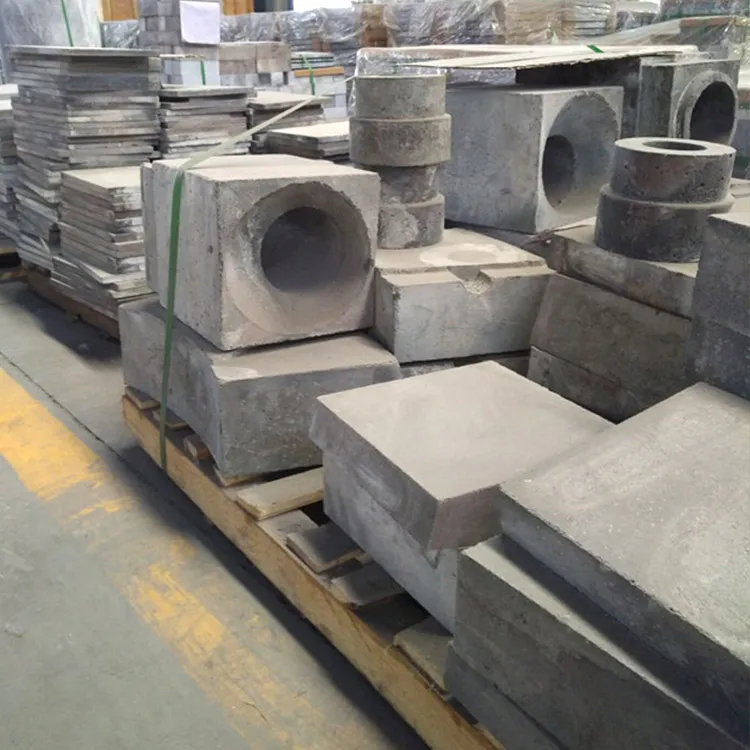
In the field of high - temperature industrial kilns, the proper use of refractory bricks is crucial for the efficiency and safety of kiln operation. This article delves into the application scenarios and masonry techniques of mullite insulation refractory bricks used in industrial kilns, drawing on real - world cases from various high - temperature industrial kilns such as electro - porcelain drawer kilns, tunnel kilns, and ceramic roller kilns.
Each type of industrial kiln has its own unique application characteristics and technical requirements for refractory bricks. For example, in electro - porcelain drawer kilns, the refractory bricks need to withstand rapid temperature changes. The mullite insulation refractory bricks used here are designed to have excellent thermal shock resistance, ensuring long - term stable operation. In tunnel kilns, which are used for continuous production, the refractory bricks should have high strength and good insulation performance to reduce energy consumption. Ceramic roller kilns, on the other hand, require refractory bricks with precise dimensions to ensure smooth material transportation and uniform heating.

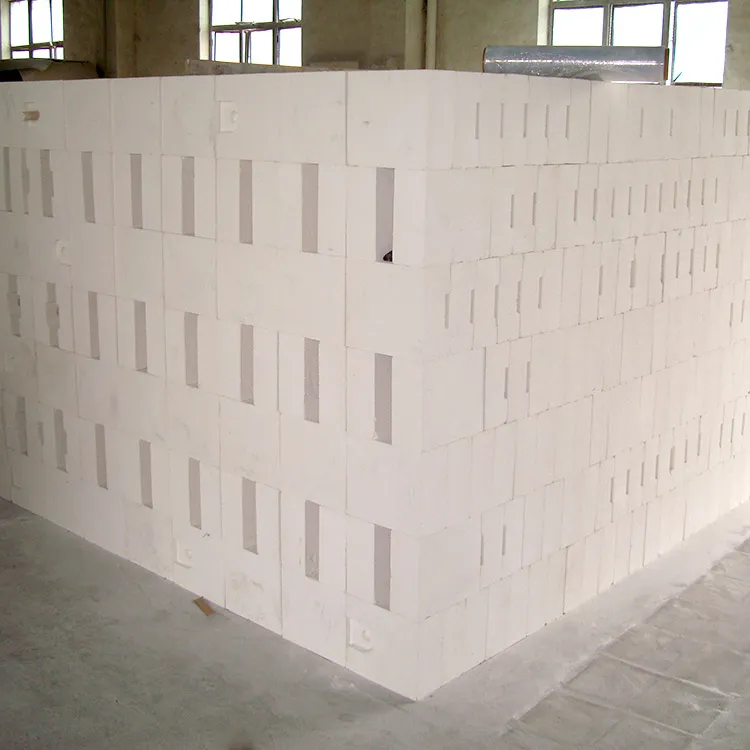
The precise dimensions of high - strength insulation refractory bricks bring significant advantages to the masonry process. Firstly, they enable rapid masonry. With accurate dimensions, workers can quickly assemble the bricks, reducing the construction time by up to 30% compared to bricks with less precise dimensions. Secondly, rational masonry design can save the amount of refractory mortar. By optimizing the joint width and masonry pattern, it is possible to reduce the mortar usage by about 20%, which not only saves costs but also improves the overall structural stability of the kiln.
The masonry process of refractory bricks involves several key steps. The pre - preparation includes checking the quality and quantity of bricks, as well as the condition of the kiln foundation. Dimension verification is essential to ensure that all bricks meet the design requirements. The masonry sequence should be carefully planned, starting from the bottom and working upwards in a stable and orderly manner. The selection of mortar materials is also critical. High - quality mortar with appropriate bonding strength and heat resistance should be chosen according to the specific requirements of the kiln. After masonry, proper curing management is necessary to ensure the full performance of the refractory materials.
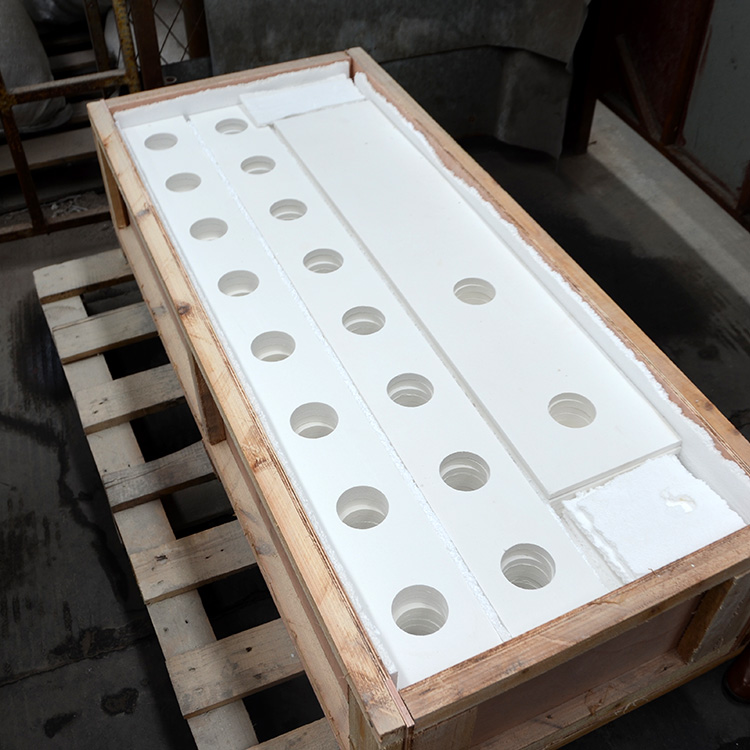
During the masonry process, various problems may occur, such as uneven joints, brick cracking, and poor bonding. Based on practical construction experience, this article provides corresponding solutions. For example, if the joints are uneven, it may be due to improper brick leveling or incorrect mortar application. By adjusting the leveling tools and improving the mortar application method, this problem can be effectively solved. For brick cracking, it may be caused by thermal stress or improper handling. Selecting bricks with better thermal shock resistance and improving the handling process can prevent this problem.
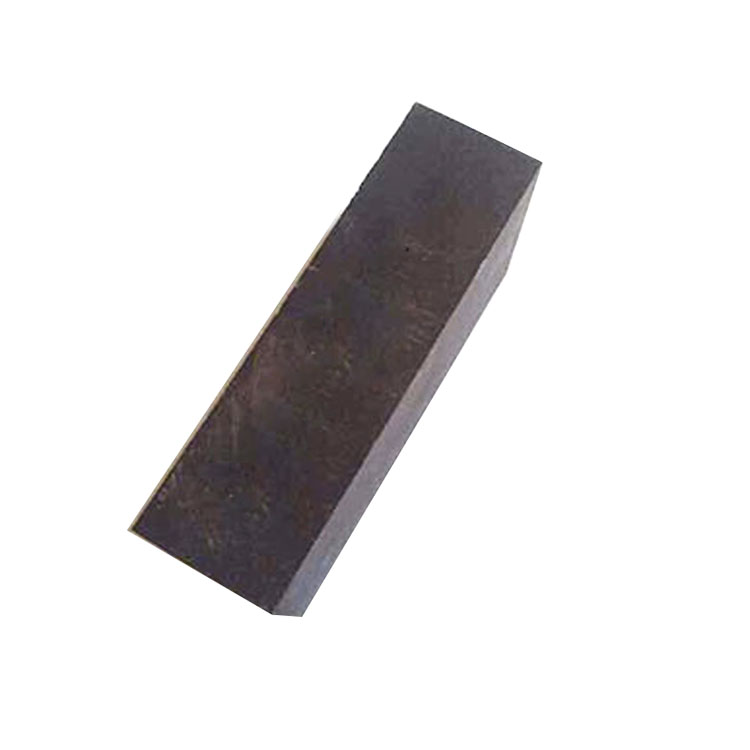
In conclusion, this article comprehensively analyzes the application and masonry of industrial kiln refractory bricks through real - world cases. By understanding these application scenarios, advantages, processes, and solutions, engineers and technical decision - makers can optimize the kiln structure, ensure the performance of refractory materials, and improve the operation efficiency and safety of the kiln. If you want to learn more about our high - quality mullite insulation refractory bricks and professional technical support, click here.
 Causes of refractory brick cracking
Prevention of thermal stress damage
Chemical furnace maintenance
Thermal shock - resistant refractory materials
Identification of thermal stress in refractory bricks
high temperature furnace insulation
low thermal conductivity bricks
refractory brick installation
thermal shock resistant materials
energy-efficient furnace design
thermal stress refractory brick
chemical furnace maintenance
thermal shock resistant bricks
high-strength insulating fireclay
refractory brick early damage detection
Chemical furnace lining materials
Refractory insulation brick selection
High - strength refractory clay bricks
Chemical furnace refractory materials
Furnace lining material performance comparison
high alumina insulating brick
porous structure insulation
thermal conductivity porosity relationship
industrial furnace energy saving
fireproof material efficiency
Causes of refractory brick cracking
Prevention of thermal stress damage
Chemical furnace maintenance
Thermal shock - resistant refractory materials
Identification of thermal stress in refractory bricks
high temperature furnace insulation
low thermal conductivity bricks
refractory brick installation
thermal shock resistant materials
energy-efficient furnace design
thermal stress refractory brick
chemical furnace maintenance
thermal shock resistant bricks
high-strength insulating fireclay
refractory brick early damage detection
Chemical furnace lining materials
Refractory insulation brick selection
High - strength refractory clay bricks
Chemical furnace refractory materials
Furnace lining material performance comparison
high alumina insulating brick
porous structure insulation
thermal conductivity porosity relationship
industrial furnace energy saving
fireproof material efficiency